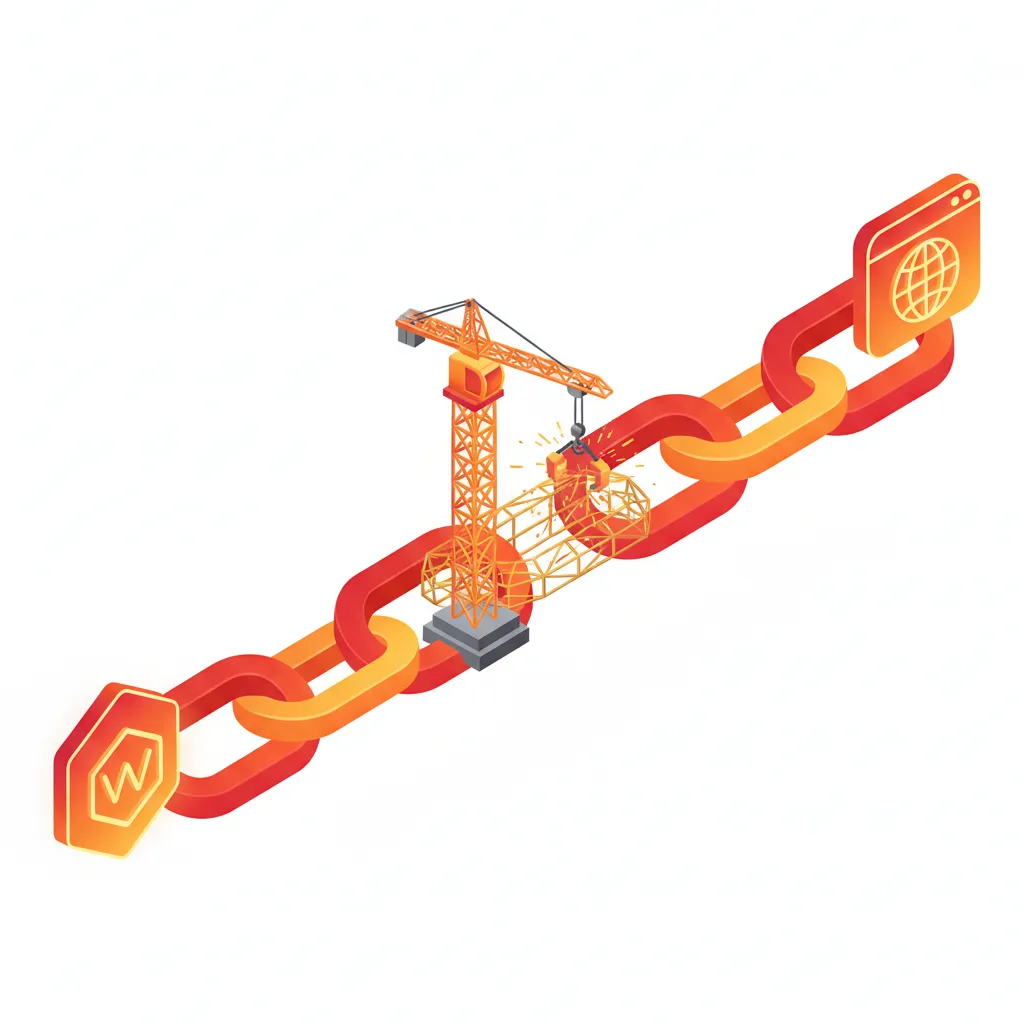
What Is a Private Blog Network (PBN)?
A Private Blog Network (PBN) is a collection of websites owned and controlled by a single entity, used specifically to build backlinks to a target website (referred to as the "money site"). PBN sites are typically built on expired domains that still carry existing authority from their previous owners.
The premise is straightforward: instead of earning backlinks through outreach, content marketing, or genuine editorial merit, you create your own network of sites and link them to your money site. You control the anchor text, the linking pages, and the timing — giving you complete control over your backlink profile.
How PBNs Work
Building a PBN typically involves these steps:
- Acquire expired domains — Find domains with existing authority metrics (DA, DR, trust flow) that have expired or are available for purchase.
- Rebuild the websites — Host each domain on different hosting providers and IP addresses. Create content that appears legitimate.
- Add links to the money site — Place contextual backlinks within the PBN content pointing to the target website.
- Maintain the network — Regularly publish new content and ensure sites appear active and legitimate.
Google's Stance on PBNs
Google's position is unambiguous: PBNs violate Google's spam policies. They are classified under "link spam" and specifically under "link schemes" designed to manipulate PageRank. Google's documentation explicitly states:
"Any links that are intended to manipulate rankings in Google Search results may be considered link spam. This includes any behavior that manipulates links to your site or outgoing links from your site."
Google's Webspam team, led by efforts that have evolved from Matt Cutts to the current algorithmic systems, has invested heavily in detecting PBNs. Their methods have become increasingly sophisticated over the years.
How Google Detects PBNs
Google uses multiple signals to identify PBN networks:
- Shared hosting footprints — Sites on the same IP address, hosting provider, or CDN pattern raise flags.
- WHOIS and registration data — Same registrant information, creation dates, or registrar patterns across multiple domains.
- Content quality patterns — PBN sites often have thin, AI-generated, or spun content that follows detectable patterns.
- Linking patterns — Multiple sites linking to the same money site with similar anchor text distribution is suspicious.
- Design and template similarities — Using the same WordPress themes, plugins, or site structures across the network.
- Analytics and AdSense connections — Sharing the same Google Analytics or AdSense account links sites together.
- Lack of real traffic and engagement — PBN sites typically have no genuine organic traffic, social engagement, or user interaction.
- Manual review — Google's manual actions team reviews suspected link schemes reported through spam reports and quality rater evaluations.
The Real Risks of Using PBNs
The consequences of being caught using a PBN range from severe to devastating:
Manual Penalty
Google's Webspam team can issue a manual action against your site for "unnatural links pointing to your site." This can result in specific pages or your entire domain being demoted or removed from search results. Recovery requires disavowing the PBN links and submitting a reconsideration request — a process that can take months.
Algorithmic Devaluation
Even without a manual penalty, Google's algorithms (including the link spam update systems) can algorithmically devalue or ignore PBN links. In this scenario, you have invested thousands of dollars in a network that provides zero SEO benefit.
Complete Deindexing
In severe cases, both the PBN sites and the money site can be completely removed from Google's index. For a business that depends on organic traffic, this is catastrophic.
Financial Loss
Building and maintaining a PBN is expensive. Domain purchases, hosting across multiple providers, content creation, and ongoing maintenance can easily cost $5,000-$20,000+ per year. If the network is detected and penalized, that entire investment is lost — along with the organic traffic your money site was generating.
Ongoing Anxiety
PBN operators live in constant fear of detection. Every algorithm update triggers anxiety. Every ranking fluctuation sparks concern. This psychological burden is rarely discussed but is very real for anyone who relies on a PBN for their livelihood.
Safer Alternatives That Deliver Lasting Results
The good news is that there are legitimate strategies that can build your backlink profile more effectively and without any risk of penalties:
- High-authority guest posting — Earn editorial backlinks from real publications with real audiences. Our high-authority backlink service delivers DA 50-90+ links from legitimate websites.
- Digital PR and HARO — Get featured in media publications by providing expert commentary and original data.
- Content-led link building — Create resources so valuable that other websites link to them naturally — original research, comprehensive guides, and unique tools.
- Broken link building — Replace broken links on authority sites with your relevant content.
- Competitor backlink replication — Analyze where your competitors earn links and pursue the same opportunities.
For a complete overview of legitimate link building tactics, read our guide to building backlinks in 2026.
When Might PBNs Be Considered?
We believe in honest, transparent advice. There are specific scenarios where some SEO practitioners use PBNs:
- Short-term affiliate or churn-and-burn sites — Sites that are designed to rank temporarily and are considered disposable.
- Testing and experimentation — Some SEOs use PBNs on test sites to study how Google's algorithm responds (not on client sites).
Even in these cases, the risk-reward calculation has shifted dramatically against PBNs as Google's detection methods have improved. What worked in 2018 is far more likely to be caught in 2026.
Conclusion: Build Authority the Right Way
PBNs offer the illusion of control and quick results, but the reality is a high-risk strategy with diminishing returns. Google's ability to detect artificial link networks improves with every algorithm update, and the consequences of detection range from link devaluation to complete deindexing.
For sustainable, penalty-proof link building, invest in strategies that create real value. If you need professionally managed backlinks from legitimate, high-authority websites, explore SEO Atlantic's managed PBN alternative service or our high-authority backlink service. We build links that not only boost rankings today but continue to deliver value for years to come.